















For decades, India’s craft traditions have existed in parallel to its modern economy, rich in history, yet largely underrepresented in global markets. Indian Craft Economy
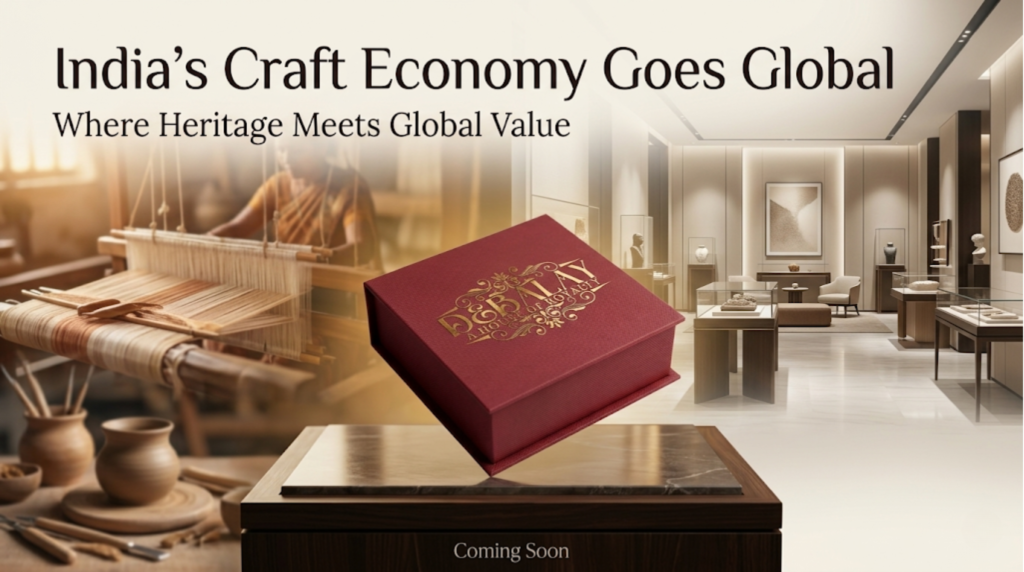
While technology, manufacturing, and services have dominated the country’s economic narrative, another sector has continued to evolve quietly.
One rooted not in scale, but in skill.
Not in speed, but in continuity.
India’s craft economy.
A Legacy That Was Never Lost
Across regions, generations of artisans have preserved techniques that date back centuries.
Clay molded without industrial tools.
Metal cast using traditional methods.
Textiles woven through intricate manual processes.
These practices were never abandoned.
They were simply never fully integrated into the global premium ecosystem.
Until now.
The Gap Between Value and Visibility
Despite its cultural richness, India’s handcrafted sector has long faced a fundamental challenge:
A lack of structured global presentation.
The value existed.
The demand existed.
But the bridge between the two remained fragmented.
Artisans operated locally.
Markets operated globally.
And in between, a disconnect persisted.
A Shift in Global Demand
In recent years, global consumers, particularly those in high-income segments, have begun to seek more than just products.
They are looking for:
- Authenticity
- Cultural relevance
- Origin-based value
This shift has created a new kind of demand, one that aligns naturally with what India’s craft economy already offers.
Not mass-produced goods, but meaningful objects.
From Fragmentation to Curation
The next phase of growth for this sector is not industrial expansion.
It is curation.
Identifying pieces that truly represent cultural heritage.
Presenting them in a refined and structured manner.
Positioning them within a global context that understands their value.
This is not about scaling production.
It is about elevating perception.
A New Layer of Cultural Infrastructure
What India’s craft economy is beginning to develop is something more nuanced than traditional commerce.
A layer of cultural infrastructure that connects:
- Artisan knowledge
- Regional identity
- Global appreciation
Through careful selection and thoughtful presentation, these elements are being brought together in a way that feels cohesive, intentional, and relevant to a modern audience.
The Role of Emerging Platforms
Without widespread attention, a new kind of platform is beginning to take shape, one that does not operate as a conventional marketplace.
Instead, it appears to function as a curated cultural interface.
A space where:
- Craft is contextualized
- Origin is emphasized
- Presentation is refined
Such platforms do not aim to increase quantity.
They aim to increase understanding.
A Market Redefined by Depth
As this transition unfolds, the definition of value within this sector is changing.
The focus is shifting from:
Price → Meaning
Availability → Rarity
Production → Provenance
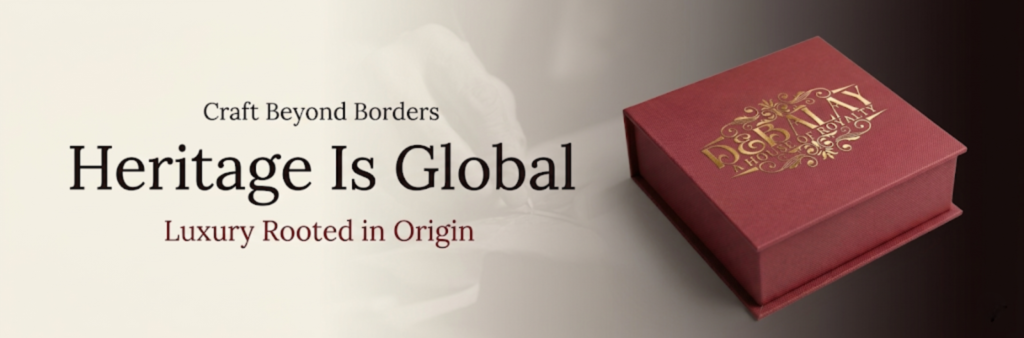
This evolution positions India’s craft economy not as an alternative to global luxury but as a complementary dimension of it.
Global Relevance, Rooted Identity
What makes this moment particularly significant is that it does not require reinvention.
India’s craft traditions are already globally relevant.
They carry:
- Cultural depth
- Technical complexity
- Historical continuity
What is changing is how they are being seen and how they are being presented.
Looking Ahead
The integration of India’s craft economy into the global premium landscape will not happen overnight.
It will be gradual.
Deliberate.
Curated.
But the direction is clear.
A sector once considered fragmented is beginning to find structure.
A narrative once local is becoming global.
And a heritage once overlooked is being redefined as value.
Stay Connected
Those observing the evolution of culture-driven commerce may find this development worth following.
Instagram: instagram.com/debalayofficial
Facebook: facebook.com/DebalayGlobal
Pinterest: pinterest.com/debalayofficial
LinkedIn: https://www.linkedin.com/company/debalay-official/
YouTube: www.youtube.com/@debalayofficial
Website: debalay.com
Closing Thought
Some economies are built on innovation.
Others are built on continuity.And sometimes, the most powerful growth comes from what has always existed-
waiting to be recognized.
For more updates – Today News







+ There are no comments
Add yours